

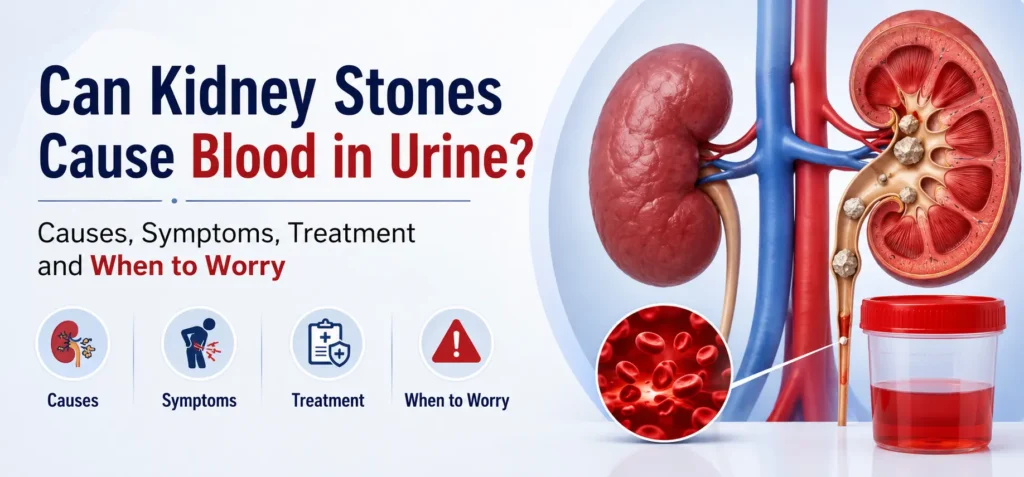
Noticing blood in your urine can be alarming. Many people immediately worry about serious conditions, but one of the most common causes is kidney stones. These hard mineral deposits can develop in the kidneys and travel through the urinary tract, often causing irritation, pain, and bleeding along the way.
If you’ve been asking, Can kidney stones cause blood in urine? the answer is yes. Blood may appear as a pink, red, or brown discoloration, or it may only be detected during a urine test. Although blood in the urine caused by kidney stones is common, it should never be ignored because it can also indicate infection, blockage, or other urological conditions.
In this comprehensive guide, you’ll learn why kidney stones cause bleeding, what symptoms to watch for, when blood in urine is considered an emergency, and the most effective treatment options recommended by urologists.
Yes, Kidney Stones Can Cause Blood in Urine
One of the earliest and most recognizable symptoms of kidney stones is blood in urine, medically known as hematuria. Research shows that a significant percentage of patients with kidney stones experience some degree of bleeding during their illness.
The bleeding occurs because kidney stones are often rough and irregular rather than smooth. As they travel through the urinary tract, they rub against the sensitive inner lining, causing tiny cuts and inflammation that result in blood mixing with urine.
Visible Blood in Urine (Gross Hematuria)
Sometimes, the amount of blood is enough to change the color of your urine. It may appear:
- Pink
- Light red
- Bright red
- Dark brown
- Tea-colored
The amount of blood doesn’t necessarily indicate the size of the kidney stone. Even a small stone can cause noticeable bleeding if it irritates delicate tissue.
Microscopic Blood in Urine
In many cases, the bleeding is too small to be seen with the naked eye. This is known as microscopic hematuria and is only detected through a urine examination.
Many patients discover they have kidney stones only after routine urine tests reveal microscopic blood.
Why Does Bleeding Happen?
The urinary tract is lined with soft tissues designed to carry urine smoothly. Kidney stones have rough, jagged surfaces that scrape these tissues as they move, causing tiny injuries that bleed.
Bleeding may occur:
- While the stone is still inside the kidney
- As it moves through the ureter
- When it reaches the bladder
- During the process of passing through the urethra
The amount of bleeding may come and go depending on the stone’s movement.
Why Do Kidney Stones Cause Blood in Urine?
Understanding the mechanism behind bleeding helps explain why this symptom is so common among kidney stone patients.
Stone Scratches the Urinary Tract
Kidney stones are formed from crystallized minerals such as calcium oxalate, uric acid, or cystine. These stones usually have uneven and sharp edges.
As they travel through the urinary tract, they scratch the inner lining, leading to small tears that bleed.
Think of it like dragging sandpaper across delicate skin. Even minor friction can cause injury and bleeding.
Irritation and Inflammation
A kidney stone doesn’t always need to move rapidly to cause damage. Even when lodged in one place, it can continuously irritate nearby tissues.
This persistent irritation triggers inflammation, causing:
- Swelling
- Tenderness
- Increased blood flow
- Fragile blood vessels
Inflamed tissues bleed much more easily, contributing to blood in the urine.
Urinary Blockage
Larger kidney stones may partially or completely block the flow of urine.
When urine cannot pass normally, pressure builds inside the kidney and ureter. This increased pressure stretches tissues and small blood vessels, making bleeding more likely.
A blockage may also lead to:
- Severe flank pain
- Kidney swelling (hydronephrosis)
- Reduced kidney function if left untreated
Kidney Stone–Related Infection
A blocked urinary tract creates an ideal environment for bacteria to grow.
If infection develops alongside a kidney stone, patients may experience:
- Blood in urine
- Burning during urination
- Fever
- Chills
- Cloudy or foul-smelling urine
An infected obstructing stone is a medical emergency requiring immediate treatment.
What Does Blood in Urine From Kidney Stones Look Like?
The appearance of blood in urine varies depending on the amount of bleeding and how long the blood has been present in the urinary tract.
| Urine Color | What It May Indicate |
|---|---|
| Light Pink | Small amount of fresh blood |
| Bright Red | Active bleeding in the urinary tract |
| Dark Red | Moderate bleeding |
| Brown | Older blood mixing with urine |
| Tea-Colored | Blood that has remained in urine for some time |
| Normal Color | Microscopic bleeding visible only on urine testing |
It is important to remember that even normal-looking urine may contain microscopic blood, which is why laboratory testing is often necessary.
Blood in the urine caused by kidney stones may appear only once or recur intermittently as the stone changes position.
Can Kidney Stones Cause Blood in Urine Without Pain?
Yes. Kidney stones can cause blood in urine even without pain.
Many people assume that kidney stones always produce severe pain, but this isn’t always true.
Several situations can result in painless bleeding.
Small Kidney Stones
Very small stones may pass through the urinary tract with minimal discomfort while still scratching the lining enough to produce bleeding.
Patients may notice blood in the urine without experiencing the classic intense flank pain.
Early-Stage Stones
A stone that remains inside the kidney may not obstruct urine flow immediately.
During this stage, the stone can cause minor irritation and microscopic bleeding before significant pain develops.
Microscopic Bleeding
In many cases, blood is only detected during a routine urine examination.
Patients often have no symptoms at all until imaging studies reveal the presence of kidney stones.
Other Causes Should Never Be Ignored
Although kidney stones are a common explanation, blood in urine without pain should always be evaluated by a urologist.
Painless hematuria can sometimes indicate:
- Urinary tract infections
- Enlarged prostate
- Kidney disease
- Bladder conditions
- Rarely, urinary tract cancers
Early diagnosis is essential for identifying the underlying cause and starting appropriate treatment.
Key Takeaways
- Kidney stones are one of the leading causes of blood in urine.
- Bleeding occurs because stones scratch, irritate, or block the urinary tract.
- Blood may be visible or detected only through laboratory testing.
- Some patients experience bleeding without pain.
- Any episode of blood in the urine should be medically evaluated, even if it resolves on its own.
Other Symptoms That May Occur Along With Blood in Urine
Although blood in the urine is one of the most common signs of kidney stones, it is rarely the only symptom. As the stone moves through the urinary tract, it can cause a variety of symptoms depending on its size, location, and whether it blocks the flow of urine.
If you notice blood in your urine along with any of the following symptoms, it may indicate a kidney stone that requires medical evaluation.
Severe Flank Pain
The classic symptom of a kidney stone is sudden, intense pain in the side or back, just below the ribs. This pain, known as renal colic, often comes in waves as the stone moves through the ureter.
Patients commonly describe it as one of the most severe pains they have ever experienced.
Back Pain
Some kidney stones cause a dull ache in the lower back that gradually becomes more intense. The discomfort may remain on one side or radiate toward the abdomen and groin.
Burning During Urination
If the stone reaches the lower urinary tract or urethra, it may cause irritation while passing urine, resulting in a burning sensation similar to a urinary tract infection.
Frequent Urination
A stone near the bladder can create the constant urge to urinate, even when very little urine is passed.
Nausea and Vomiting
The kidneys and digestive system share nerve pathways. Severe kidney stone pain often triggers nausea and vomiting, particularly during episodes of renal colic.
Fever and Chills
If blood in the urine is accompanied by fever or chills, it may indicate a urinary tract infection associated with the kidney stone. This requires urgent medical attention because an infected, obstructed urinary tract can quickly become life-threatening.
Additional Symptoms May Include
- Cloudy or foul-smelling urine
- Pain radiating to the groin
- Difficulty passing urine
- Interrupted urine flow
- Restlessness due to severe pain
Is It Normal to Pee Blood With Kidney Stones?
Yes, blood in the urine is a common symptom of kidney stones. However, “common” does not mean it should be ignored.
Many patients pass small amounts of blood before, during, or after a kidney stone moves through the urinary tract. This bleeding usually results from irritation caused by the stone’s rough surface.
The amount of blood can vary significantly:
- A few drops visible in urine
- Pink or reddish urine
- Dark brown urine
- Microscopic blood detected only through testing
Some patients experience intermittent bleeding. The urine may appear normal for several hours or even days before blood becomes visible again as the stone changes position.
Although kidney stones are a frequent cause of hematuria, blood in the urine can also be associated with infections, kidney disease, prostate disorders, or, in rare cases, urinary tract cancers. For this reason, every episode of unexplained blood in the urine should be assessed by a healthcare professional.
How Long Does Blood in Urine Last After a Kidney Stone?
The duration of bleeding depends on several factors, including the size of the stone, its location, whether it has passed naturally, and whether any treatment has been performed.
Small Stones
Small stones that pass on their own usually cause bleeding for a few hours to a few days. Once the stone leaves the urinary tract and the tissues heal, the urine typically returns to its normal color.
Larger Stones
Large stones may continue causing irritation as they move slowly through the urinary tract. In these cases, blood in the urine may come and go for several days or even weeks until the stone is removed.
After Kidney Stone Treatment
Some bleeding after treatment is expected.
Following procedures such as:
- Laser stone removal
- Ureteroscopy (URSL)
- PCNL (Percutaneous Nephrolithotomy)
patients may notice light blood in the urine for a short period while the urinary tract heals.
This usually improves within a few days, although your urologist will advise you on what to expect based on the procedure performed.
When Should Bleeding Be Re-Evaluated?
Consult your doctor if:
- Blood continues for more than a few days after passing the stone.
- The urine becomes increasingly red instead of improving.
- Blood clots appear.
- Bleeding returns repeatedly.
- You develop fever or worsening pain.
Persistent bleeding always deserves further evaluation to rule out infection or another underlying condition.
When Should Blood in Urine Be Considered an Emergency?
While mild bleeding from kidney stones is common, some situations require immediate medical attention.
Seek emergency care if you experience any of the following:
Heavy Bleeding
If your urine becomes bright red or resembles pure blood, immediate evaluation is necessary.
Blood Clots
Passing blood clots may indicate significant bleeding and can also block the urinary tract, making urination difficult.
Fever With Blood in Urine
A temperature above 38°C (100.4°F), especially with chills, may indicate a kidney infection associated with an obstructing stone.
This is a medical emergency that requires prompt treatment.
Severe, Uncontrolled Pain
Kidney stone pain that cannot be managed with prescribed medication should be assessed urgently.
Inability to Pass Urine
Complete urinary obstruction can damage the kidneys if not treated quickly.
Persistent Symptoms
Blood in the urine that continues despite treatment or repeatedly returns should never be ignored.
Emergency Warning Signs
| Symptom | Recommended Action |
|---|---|
| Heavy bleeding | Visit the emergency department immediately |
| Blood clots | Seek urgent medical care |
| Fever with chills | Emergency evaluation required |
| Severe flank pain | Contact a urologist immediately |
| Unable to urinate | Emergency treatment is necessary |
| Persistent blood in urine | Schedule an urgent medical consultation |
How Are Kidney Stones Diagnosed?
Diagnosing kidney stones involves a combination of medical history, physical examination, laboratory tests, and imaging studies.
Early diagnosis helps prevent complications and ensures the most effective treatment.
Urine Test
A urine analysis is often the first investigation.
It helps detect:
- Blood in the urine
- Infection
- Crystals that may indicate stone formation
- Urine acidity (pH)
Your doctor may also recommend a 24-hour urine collection to identify factors contributing to recurrent stone formation.
Ultrasound
Ultrasound is a safe, radiation-free imaging test commonly used to detect kidney stones.
It is particularly useful for:
- Pregnant women
- Children
- Initial evaluation of kidney obstruction
However, very small ureteric stones may not always be visible.
CT Scan
A non-contrast CT scan is considered the gold standard for diagnosing kidney stones.
It can accurately determine:
- Stone size
- Exact location
- Number of stones
- Degree of urinary obstruction
CT scans are especially helpful when symptoms are severe or the diagnosis is uncertain.
Blood Tests
Blood tests help evaluate:
- Kidney function
- Signs of infection
- Calcium levels
- Uric acid levels
- Electrolyte balance
These tests also assist in identifying metabolic conditions that increase the risk of stone formation.
Accurate Diagnosis Leads to Better Treatment
Advanced imaging and diagnostic facilities available at a Urology Hospital in Jaipur can help identify the exact cause of blood in urine and determine the most appropriate treatment plan.
Treatment for Kidney Stones Causing Blood in Urine
The best treatment for kidney stones depends on several factors, including the stone’s size, location, composition, and whether it is causing severe symptoms or complications. While many small stones pass naturally, larger stones often require medical intervention to prevent persistent bleeding, pain, infection, or kidney damage.
1. Hydration and Observation
For kidney stones smaller than 5 mm, your doctor may recommend conservative management.
This typically includes:
- Drinking 2.5–3 liters of water daily (unless otherwise advised)
- Straining urine to collect the stone for analysis
- Monitoring symptoms
- Regular follow-up imaging
Staying well-hydrated helps increase urine flow, making it easier for small stones to pass naturally while reducing irritation that causes blood in the urine.
2. Medications
Several medications can help manage kidney stones and reduce associated symptoms.
Pain Relievers
Kidney stone pain can be intense. Your doctor may prescribe medications to relieve pain while the stone passes.
Alpha-Blockers
Medicines such as tamsulosin help relax the muscles of the ureter, allowing stones to pass more easily and reducing discomfort.
Antibiotics
If a urinary tract infection is present alongside a kidney stone, antibiotics are essential. Treating the infection promptly reduces the risk of serious complications.
3. Laser Kidney Stone Treatment
Laser lithotripsy is one of the most advanced and minimally invasive treatments available today.
During this procedure:
- A thin endoscope is inserted through the urinary tract.
- A laser fiber breaks the stone into tiny fragments.
- The fragments are either removed or passed naturally through urine.
Benefits
- No large surgical incision
- Minimal bleeding
- Faster recovery
- High success rate
- Short hospital stay
Laser treatment is particularly effective for ureteric and kidney stones that are unlikely to pass on their own.
4. URSL (Ureteroscopic Lithotripsy)
URSL is commonly recommended for stones lodged in the ureter.
A small ureteroscope is passed through the natural urinary passage to locate the stone. It is then fragmented using a laser and removed safely.
Advantages
- Minimally invasive
- No external cuts
- High stone clearance rates
- Quick recovery
- Reduced risk of recurrence with proper follow-up
Patients are usually able to return to normal activities within a few days.
5. PCNL (Percutaneous Nephrolithotomy)
PCNL is generally recommended for:
- Large kidney stones (usually larger than 2 cm)
- Multiple kidney stones
- Complex or staghorn stones
During PCNL, a small incision is made in the back to access the kidney directly and remove the stone.
Benefits
- Effective for large stones
- High stone-free rates
- Prevents long-term kidney damage
- Shorter recovery compared to traditional open surgery
Although PCNL is more invasive than laser treatment or URSL, it remains the preferred option for complex kidney stones.
If you’re exploring kidney stone treatment, choosing the right procedure depends on your stone size, location, and overall health. An experienced urologist can recommend the most suitable approach after a detailed evaluation.
Modern endoscopic urology procedures offer minimally invasive solutions with faster recovery, less discomfort, and excellent treatment outcomes for most patients.
Can Blood in Urine Be Caused by Something Other Than Kidney Stones?
Yes. Although kidney stones are one of the most common causes of hematuria, they are not the only reason blood may appear in the urine. Several other conditions can produce similar symptoms, making an accurate diagnosis essential.
| Condition | Common Symptoms | Blood in Urine | Pain | Typical Treatment |
|---|---|---|---|---|
| Kidney Stones | Severe flank pain, nausea, urinary urgency | Yes | Usually severe | Hydration, medications, laser treatment, URSL, PCNL |
| Urinary Tract Infection (UTI) | Burning urination, frequent urination, fever | Yes | Mild to moderate | Antibiotics |
| Enlarged Prostate (BPH) | Weak urine stream, frequent nighttime urination | Sometimes | Usually no | Medication or surgery |
| Bladder Infection | Burning urination, pelvic discomfort | Yes | Mild | Antibiotics |
| Kidney Infection | Fever, chills, back pain | Yes | Moderate to severe | Antibiotics, hospitalization if severe |
| Bladder Cancer | Painless blood in urine | Common | Usually no | Specialist evaluation and cancer treatment |
Because many of these conditions have overlapping symptoms, blood in the urine should always be assessed by a qualified urologist.
How to Prevent Kidney Stones and Future Episodes of Blood in Urine
Preventing kidney stones is often easier than treating them. Healthy lifestyle habits can significantly reduce the risk of recurrence.
Stay Well Hydrated
Drink enough water throughout the day to produce clear or pale-yellow urine. Proper hydration dilutes minerals that can form stones.
Reduce Salt Intake
A high-sodium diet increases calcium levels in the urine, which can contribute to stone formation. Limit processed foods, packaged snacks, and excessive table salt.
Follow a Balanced Diet
Depending on the type of stone, your doctor may recommend:
- Eating calcium-rich foods in moderation
- Limiting foods high in oxalates if appropriate
- Reducing excessive animal protein
- Increasing fresh fruits and vegetables
- Maintaining a healthy body weight
Avoid Dehydration in Rajasthan’s Climate
Hot weather increases fluid loss through sweating, making dehydration more likely. People living in Rajasthan should drink extra fluids, especially during summer months or while working outdoors.
Attend Regular Follow-Up Visits
If you’ve had kidney stones before, periodic urine tests and imaging can detect new stones early, before they cause pain or bleeding.
Doctor’s Insight
“Blood in the urine should never be ignored, even if it appears only once or is not accompanied by pain. While kidney stones are a common cause, timely evaluation is essential to rule out infections, urinary obstruction, or other serious conditions. Early diagnosis often allows treatment before complications develop.”
— Dr. Sandeep Nunia
Myth vs Fact
| Myth | Fact |
|---|---|
| Blood in urine always means cancer. | Kidney stones are one of the most common causes of blood in urine. |
| If there is no pain, there is no serious problem. | Microscopic or painless bleeding can still indicate an underlying condition. |
| Once blood disappears, treatment is unnecessary. | The underlying cause should still be identified and treated. |
| Drinking less water reduces bleeding. | Staying well-hydrated often helps prevent kidney stones and supports recovery. |
| Kidney stones always require surgery. | Many small stones pass naturally with hydration and medical management. |
Why Do Kidney Stones Cause Blood in Urine?
You should consult a urologist if you notice:
- Blood in your urine, even once
- Persistent or severe flank pain
- Recurrent kidney stones
- Burning during urination with blood
- Fever or chills along with urinary symptoms
- Difficulty passing urine
- Blood clots in the urine
- Symptoms that continue despite home care
If you are experiencing any of these signs, seeking care at a Urology Hospital in Jaipur with experienced specialists and advanced diagnostic facilities can help ensure an accurate diagnosis and timely treatment.
Frequently Asked Questions (FAQ)
1. Can kidney stones cause blood in urine without pain?
Yes. Small or early-stage kidney stones may cause microscopic or visible blood in the urine without causing significant pain.
2. Is blood in urine always caused by kidney stones?
No. Blood in the urine can also result from urinary tract infections, enlarged prostate, kidney disease, bladder conditions, or, in some cases, cancer. Medical evaluation is essential.
3. How much blood in urine is normal with kidney stones?
Any amount of blood in the urine should be evaluated. While mild bleeding is common with kidney stones, persistent or heavy bleeding requires prompt medical attention.
4. Can dehydration cause kidney stones?
Yes. Dehydration concentrates minerals in the urine, increasing the risk of stone formation. Drinking enough water is one of the best preventive measures.
5. Can kidney stones damage the kidneys?
Yes. Untreated stones that cause prolonged blockage or infection can damage kidney function. Early treatment helps prevent complications.
6. What tests diagnose kidney stones?
Diagnosis may include a urine test, blood tests, ultrasound, X-ray, and a non-contrast CT scan, which is considered the most accurate imaging test for kidney stones.
7. Can blood in urine go away on its own?
Sometimes the bleeding stops after a stone passes. However, even if it resolves, you should still consult a doctor to identify the underlying cause.
8. When should I see a urologist?
You should see a urologist if you experience blood in the urine, severe pain, recurrent stones, fever, difficulty urinating, or symptoms that persist or worsen.