

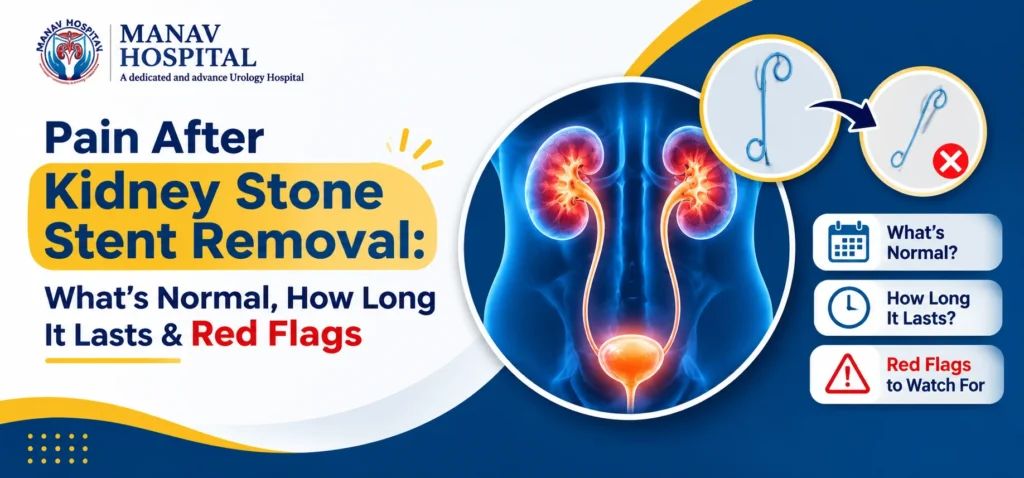
The kidney stone has been treated, and the stent is finally out. But why does your back still ache? Is pain after kidney stone stent removal normal? Yes, it can happen. Some people feel a dull ache around the lower back or side. Others notice burning when they pass urine, or keep making trips to the toilet. It can be frustrating when you thought the discomfort would end after the stent was removed. In the majority of cases, these symptoms go away, but still, the time taken can be different from one person to another.
Is Pain Normal After Stent Removal?
It is quite possible to feel sore after the stent comes out. You might even notice an ache in your back or side. Then there is burning during urination, sometimes along with a sudden urge to use the toilet. This is often temporary. DJ stent removal pain usually eases as the urinary tract settles down. Still, don’t brush it aside if the pain is severe. Fever or trouble passing urine also calls for prompt medical attention.
How Long Does Pain Last After Ureteral Stent Removal?
In case of a lot of people, mild pain after ureteral stent removal goes away within 24-48 hours. The first day or two can feel uncomfortable since you may experience burning when passing urine and find yourself going to the toilet more often. Also, there can be a dull ache around your back or bladder.
| Time after removal | What you may experience |
| First 24 hours | Mild back or bladder discomfort, burning during urination and light-pink urine. |
| 24–48 hours | Burning, urinary urgency and mild discomfort should begin to settle. |
| Days 2–3 | Most removal-related symptoms should be improving. Some people may have lingering discomfort. |
| Beyond expected recovery | Persistent or worsening pain needs a urologist’s assessment to check for possible complications. |
Why Does Kidney or Back Pain Occur After Stent Removal?
Kidney or back pain after stent removal happens because the urinary tract takes time to heal. Even then, the discomfort can point to an underlying issue that requires attention.
Ureteral Spasms After Stent Removal
The ureter is the narrow tube that carries urine from the kidney to the bladder. After the stent is removed, the muscles contract or spasm temporarily. These are responsible for a sharp or cramping pain in the side or lower back. The discomfort may come and go, particularly during urination.
Irritation of the Urinary Tract
A ureteral stent can irritate the lining of the urinary tract. Some irritation may remain after removal, causing burning during urination, bladder discomfort or a dull ache. These symptoms should gradually improve as the tissues recover.
Remaining Kidney Stone Fragments
Small stone fragments tend to remain after a kidney stone procedure. If they move through the ureter, pain similar to the original stone symptoms can be caused. Based on their size and location, further treatment may be needed. The available kidney stone removal options depend on the clinical findings.
Infection, Swelling or Urinary Obstruction
Infection or swelling in the urinary tract can also cause pain after removal. A remaining stone fragment or swelling may sometimes obstruct urine flow. Fever, chills, worsening flank pain, vomiting or difficulty passing urine should not be treated as routine recovery symptoms. Seek medical assessment promptly.
What Symptoms Are Common After DJ Stent Removal?
Some burning after stent removal is common as the urinary tract settles. You may also notice changes in your urine or need to visit the toilet more often than usual.
Burning Sensation While Urinating
A stent can irritate the urinary tract, so mild burning may continue for a short time after removal. It should gradually ease rather than become more painful.
Temporary Light-Pink Urine
You may notice a small amount of blood in your urine after the procedure. Light-pink urine can occur temporarily. However, blood in urine caused by kidney stones needs immediate medical attention.
Urinary Frequency or Urgency
Next one is that you might have to urinate more frequently or have a strong urge. The underlying reason in most cases is temporary bladder irritation.
Mild Bladder Cramps or Flank Discomfort
Some people experience mild bladder cramps or an ache in the side or lower back. Symptoms like these improve gradually.
Normal Discomfort vs Warning Signs After Stent Removal
Mild symptoms should gradually improve after removal. However, kidney stones and fever can suggest that there is an infection.
| Symptom | Usually expected during recovery | Needs medical attention |
| Pain | Mild discomfort that gradually improves. | Severe pain or pain that becomes worse. |
| Blood in urine | Slightly pink urine that clears. | Heavy bleeding, dark-red urine or blood clots. |
| Burning during urination | Mild burning that settles over time. | Burning accompanied by fever or chills. |
| Urination | Frequent urination or a sudden urge to go. | Inability to pass urine. |
How Can You Relieve Pain After Kidney Stone Stent Removal?
That lingering ache after stent removal can make even ordinary activities uncomfortable. There are a few things you can do at home to manage flank pain after ureteral stent removal, but don’t try every remedy you come across. Your urologist’s advice should come first. This is especially when you have an existing kidney condition.
Take Only Prescribed or Clinician-Approved Pain Relief
You can be tempted to take a painkiller when the discomfort gets annoying. Before doing so, check with your doctor. Some medicines are not suitable for people with kidney problems. Therefore, you must have the medication prescribed or approved by your treating clinician.
Drink Fluids as Advised
Keep drinking water as recommended. It is important to maintain urine flow during recovery. If you have been told to limit your fluid intake, follow that advice instead of forcing yourself to drink extra water.
Consider Gentle Heat if Approved
A warm compress placed over the lower back or abdomen may bring some relief from mild discomfort. Even so, check with your doctor before trying it, particularly if the pain is accompanied by other symptoms.
Rest and Resume Normal Activities Gradually
You don’t have to rush back into your usual routine. Give yourself time to rest during the first few days. After the discomfort has settled to some extent, start returning to everyday activities. Even then, if exercise or heavy physical work brings the pain back, you should give yourself more time to recover.
Track Pain and Urinary Symptoms
See how you feel over the next few days. Has the pain reduced? Is the burning getting better? Is there a change in urine colour or how often you need to urinate? These details can help your urologist understand your recovery.
Why Is Pain Not Improving 48 Hours After Stent Removal?
Possible reasons are listed here-
- Bacteria may cause persistent pain, burning during urination, fever or chills.
- Small pieces left behind may move through the ureter and cause ongoing flank pain.
- Inflammation after the procedure may temporarily affect urine flow and cause discomfort, or there could be pus cells in urine.
- A stone fragment or swelling may block urine flow. Ultimately, this might lead to pain around the kidney.
Hence, contact your urologist if kidney pain after stent removal is not improving or becomes more troublesome. Besides, urgent care is required when you are in severe pain, have fever, vomiting or difficulty passing urine.
When Should You Contact a Urologist After Stent Removal?
Seek medical advice promptly if you notice-
- Pain that continues beyond the expected recovery period or gradually gets worse.
- Burning during urination that persists or becomes more intense.
- Changes in urine colour or bleeding that does not settle.
- Repeated discomfort around the lower back, side or bladder.
Some symptoms need urgent medical attention. Do not wait for a routine appointment if you experience-
- Severe or uncontrolled pain.
- Fever or chills.
- Inability to pass urine.
- Heavy bleeding or blood clots in the urine.
- Persistent vomiting or inability to keep fluids down.
What Tests May Be Needed if Pain Continues?
If pain continues after stent removal, your urologist can recommend some tests.
- Urine routine and microscopy.
- Urine culture.
- Blood tests.
- Ultrasound of the kidneys and urinary bladder.
- X-ray KUB (Kidneys, Ureters and Bladder).
- Non-contrast CT scan of the urinary tract.
- CT KUB to check for remaining kidney stone fragments.
- Other imaging tests, if required.
Your doctor will decide which tests are appropriate based on the examination and symptoms.
Getting Urology Care for Persistent Pain After Stent Removal in Jaipur
The stent is out, but the pain hasn’t gone away. In that case, it is better to have a urologist check what is causing it rather than wait and hope it settles. At Manav Hospital in Jaipur, Dr. Sandeep Nunia provides urological care for kidney stones and other urinary problems. Patients can consult the hospital for an assessment if discomfort continues after stent removal.
FAQs
1. Is kidney pain normal after DJ stent removal?
The area around your kidney or side tends to be sore after the stent is out.
2. Why does my kidney hurt when I urinate after stent removal?
You may notice pain in your side or back as you pass urine. This can happen because the ureter is still sensitive after the stent is removed. Temporary spasms are also a reason at times.
3. Is pain 3 days after ureteral stent removal normal?
Some people still have mild discomfort on the third day. What matters is whether it is getting better. If the pain has not eased, is becoming stronger or is interfering with your daily routine, speak to your urologist. You may need an examination to find out why it is continuing.
4. Can kidney stone-like pain occur after stent removal?
Yes. The pain can feel much like the original kidney stone pain if small fragments remain in the urinary tract.
5. How long does burning urination last after stent removal?
A burning sensation when passing urine usually improves over the next few days. It should become less noticeable with time. If it continues, becomes more uncomfortable or comes with fever, chills or increasing pain, get in touch with your doctor. An infection may need to be ruled out.
6. Is blood in urine normal after kidney stent removal?
You may see a slight pink colour in your urine shortly after the stent is removed. This should clear as you recover. However, if the urine looks heavily bloodstained, you notice clots, or the bleeding continues, contact your doctor. These symptoms must not be dismissed as routine after-effects.
7. Can a urinary infection develop after stent removal?
Yes. An infection can develop around the time when the stent is removed.
8. When can I return to normal activities after stent removal?
You can generally return to your usual routine as the discomfort improves. If an activity brings on pain, stop and ask your urologist when you can safely resume it.