
Confused about what to eat after kidney stones? You’re not alone; most patients leave the hospital with a stone report in hand and no real idea what to put on their plate that evening. Here’s the short answer: there is no single “one-size-fits-all” kidney stone diet chart. What you eat depends heavily on the type of stone you formed, and that’s something only a stone analysis can tell you. Roughly 30% to 50% of people who’ve had one stone will form another within five years, so getting the diet right matters more than it might seem right after the pain fades.
This guide walks you through a practical kidney stone diet chart, built around the four common stone types, along with foods to eat, foods to limit, and a high-oxalate list you can actually use at home. None of this replaces a consultation with a urologist; think of it as a starting point for the conversation you’ll have at your next visit, especially if you’ve had more than one episode or you’re at a leading urology hospital in Jaipur for treatment.
Why Does Diet Matter in Kidney Stones?
Diet matters because most kidney stones form when certain substances, such as calcium, oxalate, uric acid and sodium, build up in urine that isn’t dilute enough to keep them dissolved. This isn’t a fringe idea. It’s backed by decades of urology research, and it’s the reason every kidney stone prevention diet plan starts with the same two questions: what’s in your urine, and what’s in your stone.
How Diet Affects Stone Formation
Stones crystallize when urine becomes supersaturated with stone-forming salts, mainly calcium oxalate, calcium phosphate, uric acid, or, less commonly, cystine. Diet directly changes how much of each substance ends up in your urine.
Why Hydration Is the First Diet Rule
The NIDDK kidney stones eating, diet & nutrition recommends most adults drink six to eight 8-ounce glasses of water daily, and stone formers are usually told to aim higher, enough to produce about 2.5 liters of urine a day.
Why Diet Should Change Based on Stone Type
A diet chart built for calcium oxalate stones can actually make uric acid stones worse, and vice versa. That’s why stone analysis matters so much after treatment: knowing exactly what your stone was made of tells your doctor which foods to focus on limiting.
Types of Kidney Stones and Diet Focus for Each Type
Most people assume all kidney stones are the same, but composition changes everything about the diet advice that follows.
Here’s a quick breakdown of where the diet focus shifts for each major stone type.
| Stone Type | Diet Focus | Foods to Limit | Doctor Advice |
| Calcium Oxalate | Balance calcium with oxalate at meals | Spinach, beetroot, nuts, chocolate | Don’t cut calcium; pair it with meals |
| Uric Acid | Reduce purine load, alkalinize urine | Red meat, organ meat, certain seafood | Check blood uric acid levels regularly |
| Calcium Phosphate | Watch sodium and animal protein | Salty snacks, processed foods | Often linked to urinary tract conditions |
| Cystine | High fluid intake is critical | High-sodium, high-protein foods | Needs specialist metabolic evaluation |
Calcium Oxalate Stones
These are the most common stones seen in Indian patients, and the diet approach centers on limiting high-oxalate foods while still getting enough calcium, not avoiding it entirely.
Uric Acid Stones
These form when urine is too acidic, often linked to high purine intake from red meat and certain lentils in excess. A low-purine kidney stone diet, along with citrus fruits to alkalinize urine, tends to help here.
Calcium Phosphate Stones
Less common but strongly tied to sodium intake and sometimes to urinary tract infections. Cutting back on packaged, salty foods makes a difference.
Cystine Stones
A rare, genetic form of stone disease where high fluid intake isn’t optional, it’s the single most important part of management, alongside medication a urologist may prescribe.
Kidney Stone Diet Chart for Indian Patients
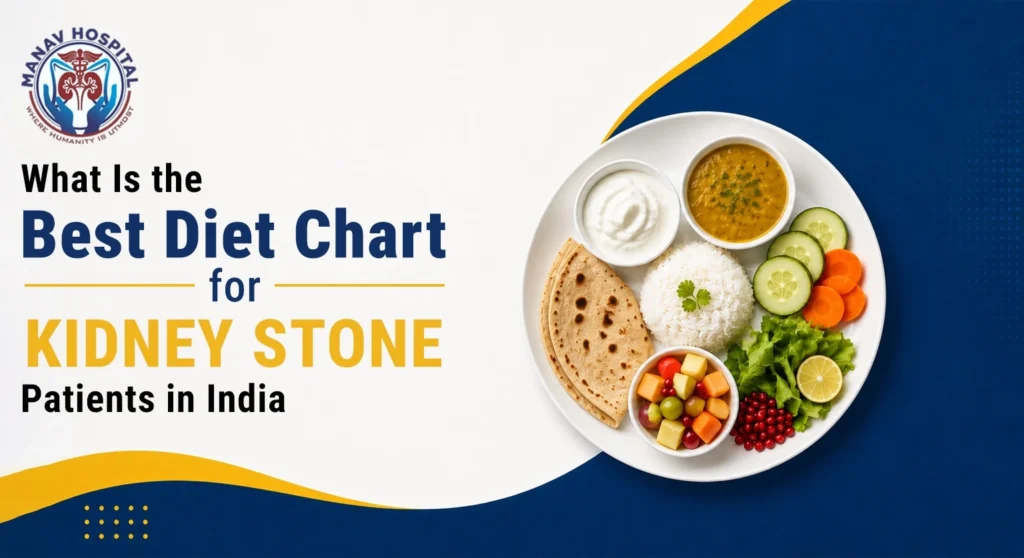
Below is a sample kidney stone diet chart for Indian patients that works across most calcium oxalate cases, with notes on where to adjust for other stone types.
| Time | Indian Food Options | Notes |
| Early Morning | Water or lemon water | Skip if you have acidity issues |
| Breakfast | Poha, upma, idli, oats, dalia | Avoid adding extra salt or pickles |
| Mid-Morning | Seasonal fruit, buttermilk | Good hydration boost |
| Lunch | Roti/rice, dal, low-oxalate sabzi, curd | Pair calcium-rich curd with the meal |
| Evening Snack | Roasted chana, makhana, fruit | Keep salted namkeen out of rotation |
| Dinner | Light sabzi, roti, soup, curd | Keep dinner lighter than lunch |
Early Morning: Water or Lemon Water
Starting the day with a full glass of water helps dilute overnight urine concentration, which tends to be at its highest right after waking.
Breakfast Options: Poha, Upma, Idli, Oats, Dalia
These are naturally low in oxalate and easy on sodium if you go light on salt. Oats also add fibre, which several dietary studies link to lower stone recurrence.
Lunch Options: Roti/Rice, Dal, Low-Oxalate Sabzi, Curd
Dal in moderate portions is fine for most patients; it’s a good plant protein source that’s gentler on the kidneys than red meat. Curd at lunch is an easy way to hit your daily calcium target.
Evening Snacks: Fruit, Roasted Chana, Makhana in Moderation
Skip the fried and salted snacks here. Roasted chana and a piece of fruit do the job without adding a sodium load.
Dinner Options: Light Sabzi, Roti, Soup, Curd
Keep dinner on the lighter side, and try to finish eating a couple of hours before bed so your body isn’t processing a heavy meal overnight.
Foods to Eat in Kidney Stones
Choosing the right foods can help lower the risk of kidney stone formation and support overall kidney health. According to dietary recommendations from kidney health experts, a balanced diet that includes plenty of fluids, calcium-rich foods, fruits, vegetables, and other stone-friendly options may help prevent future stones. Here are some foods that are generally considered beneficial for people with kidney stones:
Hydrating Foods and Drinks
Water is non-negotiable, but coconut water, buttermilk, and diluted lemon water all count toward your fluid target too. Citrate in lemon water may help prevent calcium stones specifically.
Low Oxalate Indian Vegetables
Indian diet for kidney stone patients must include bottle gourd (lauki), ridge gourd (turai), cabbage, cauliflower, and cucumber. These are all reasonable choices that won’t add much oxalate to your day.
Calcium-Rich Foods in the Right Amount
Milk, curd, and paneer in normal portions, eaten with meals rather than on an empty stomach, actually help bind oxalate in your gut before it reaches your kidneys.
Safe Indian Staples in Normal Portions
Rice, roti, and most dals in typical serving sizes are fine for the majority of stone formers. There’s rarely a need to eliminate entire food groups.
Foods to Avoid or Limit in Kidney Stones
The table below groups the main harmful foods by category, since Indian diets tend to repeat the same dishes across regional cuisines.
| Food Category | Indian Examples | Why Limit | Better Option |
| High Oxalate | Palak, beetroot, chocolate | Raises urinary oxalate | Bottle gourd, cabbage |
| High Sodium | Pickle, papad, namkeen, chips | Increases calcium in urine | Home-cooked, low-salt meals |
| High Animal Protein | Red meat, excess seafood | Raises uric acid and calcium loss | Dal, paneer in moderation |
| Sugary Drinks | Cola, packaged juice | Linked to higher stone risk | Water, buttermilk, coconut water |
High Oxalate Foods: Palak, Beetroot, Nuts, Chocolate, Tea
The high oxalate foods list doesn’t need to be removed from your diet, but eating them daily, in large quantities, is where the risk builds up.
High Salt Foods: Pickle, Papad, Namkeen, Chips, Packaged Snacks
Indian snacking culture depends heavily on salt, and it adds up fast across a day; three or four salty snacks can quietly push your sodium intake well past what’s advisable.
Excess Animal Protein and High-Purine Foods
Red meat and organ meats are among the foods to avoid in kidney stones. They raise both uric acid and urinary calcium. Occasional consumption is generally fine; daily heavy portions are the concern.
Sugary Drinks, Cola and Packaged Juices
Beyond the sugar itself, colas contain phosphoric acid, which some research links to increased stone risk over time.
Supplements to Avoid Without a Doctor’s Advice
Vitamin C megadoses and calcium supplements taken without food can both raise oxalate or calcium levels in urine. Always check with your doctor before adding any supplement.
Medical Safety Note: Use “limit” as your working rule here, not “ban.” Only a doctor should tell you to strictly eliminate a food group, and usually only after reviewing your specific stone composition.
High Oxalate Indian Foods List
Here’s a clearer look at which high-oxalate foods matter most and what you can swap them for.
| High Oxalate Food | Common Indian Use | Safer Alternative |
| Spinach (Palak) | Sabzi, dal palak, saag | Cabbage, bottle gourd |
| Beetroot | Salad, juice, sabzi | Carrot, cucumber |
| Peanuts, Almonds, Cashews | Snacking, chutneys | Roasted chana, makhana |
| Chocolate and Cocoa | Desserts, beverages | Fresh fruit, jaggery in small amounts |
| Tea and Wheat Bran | Daily beverage, roti flour | Herbal tea, refined atta occasionally |
Spinach/Palak
Spinach is genuinely high in oxalate, but boiling it and discarding the water can reduce the oxalate content meaningfully.
Beetroot
Popular in juices and salads, beetroot carries a notably high oxalate load per serving, so it’s better kept as an occasional food rather than a daily habit.
Peanuts, Almonds and Cashews
Nuts are nutritious, but they’re also concentrated oxalate sources. A small handful now and then is different from a daily snacking habit.
Chocolate and Cocoa
Dark chocolate especially carries a high oxalate content, so dessert lovers with a stone history should treat it as an occasional treat.
Tea and Wheat Bran
Regular black tea, consumed multiple times a day, adds up in oxalate terms. Switching some cups to herbal alternatives can help.
Low Oxalate Indian Foods You Can Include
Once the high-oxalate list feels overwhelming, it helps to focus on the low oxalate Indian diet.
Low Oxalate Vegetables
Cabbage, cauliflower, bottle gourd, ridge gourd, and cucumber are all low-oxalate choices that can form the backbone of your sabzi rotation.
Safe Fruits and Fluids
Apples, bananas, watermelon, and citrus fruits like lemons and oranges are generally well tolerated and support hydration goals too.
Indian Meal Swaps for High Oxalate Foods
Swap palak sabzi for cabbage sabzi, beetroot salad for carrot salad, and a handful of nuts for roasted chana, small changes that add up over a month.
Calcium Oxalate Kidney Stone Diet
Calcium oxalate stones are the most frequently diagnosed stone type in Indian urology clinics, so this diet approach gets the most attention and also the most misinformation.
Foods to Limit
High-oxalate vegetables, nuts, chocolate, and excess sodium are the main areas to watch.
Foods to Include
Calcium-rich foods eaten with meals, citrus fruits, and plenty of fluids form the core of a sensible calcium oxalate kidney stone diet.
Common Mistake: Avoiding All Calcium
This is the single biggest error patients make. Cutting calcium too aggressively actually raises oxalate absorption in the gut, which can increase stone risk rather than lower it.
Uric Acid Kidney Stone Diet
Uric acid stones behave differently from calcium stones, and the diet advice shifts accordingly; this is exactly why stone analysis after passing or removing a stone matters so much.
Foods to Limit in Uric Acid Stones
Red meat, organ meats, and certain seafood carry high purine loads that raise uric acid levels.
Safer Indian Meal Options
Dal in moderate portions, plenty of vegetables, and citrus fruits to help alkalinise urine are generally well tolerated.
When to Get Uric Acid Levels Checked
If you’ve had a uric acid stone once, periodic blood tests to monitor uric acid levels are worth discussing with your urologist, especially if you have a family history of gout.
Common Indian Food Doubts for Kidney Stone Patients
Patients tend to ask the same handful of food questions in every consultation. Here are quick, honest answers to the ones that come up most.
Can Kidney Stone Patients Eat Dal?
Yes. Most dals are fine in normal portions and are a good plant-based protein alternative to red meat.
Can Kidney Stone Patients Eat Rice?
Yes, rice doesn’t carry meaningful oxalate or sodium concerns on its own.
Is Milk Good for Kidney Stones?
Yes. Dietary calcium from milk, taken with meals, actually helps bind oxalate in the gut rather than raising stone risk.
Is Curd Good for Kidney Stones?
Yes, curd is a good source of dietary calcium and is generally well tolerated by most stone formers.
Can Kidney Stone Patients Eat Tomatoes?
In moderate quantities, yes. Tomatoes aren’t among the highest oxalate foods, though very large daily portions add up.
Is Palak Bad for Kidney Stones?
Not entirely bad, but it is high in oxalate. Occasional, well-prepared servings are more sensible than daily consumption.
Is Coconut Water Good for Kidney Stones?
Yes, it’s a good hydrating option and contributes toward your daily fluid target.
Is Tea Bad for Kidney Stones?
Not in moderation. One or two cups a day is generally fine; it’s heavy, repeated daily consumption that adds up in oxalate terms.
Can Kidney Stone Patients Eat Paneer?
Yes, in normal portions, paneer contributes useful calcium without major concern.
Can Kidney Stone Patients Eat Non-Veg Food?
Occasional lean portions are usually fine, but frequent heavy servings of red meat or organ meat can raise uric acid and urinary calcium.
Diet After Kidney Stone Surgery or Stone Removal
Diet right after surgery is less about stone prevention and more about recovery; your body needs to heal first, and stricter dietary changes usually follow once you’re back to normal activity. If you’ve recently undergone kidney stone treatment in Jaipur, your urologist will likely walk you through this timeline.
What to Eat After Stone Removal
Light, easily digestible meals, plenty of fluids, and gradual reintroduction of normal foods over the first week or two after surgery.
What to Avoid After Surgery
Heavy, oily, or very spicy food in the immediate days after the procedure, since digestion tends to be sluggish right after any surgical intervention.
How to Prevent Stone Recurrence After Treatment
Once you’ve recovered, the long-term prevention diet based on your stone type becomes the priority, alongside regular follow-up.
Lifestyle Tips to Prevent Kidney Stone Recurrence
Diet alone doesn’t tell the whole story; a few consistent lifestyle habits make a measurable difference in whether stones come back. Understanding how kidney stones are formed in the first place makes these habits easier to stick to.
Here’s a simple checklist worth pinning to your fridge.
Kidney Stone Prevention Checklist:
- Drink enough water to produce roughly 2.5 litres of urine daily
- Keep salt intake moderate, especially packaged and restaurant food
- Maintain a balanced calcium intake with meals
- Keep animal protein portions moderate, not excessive
- Limit high-oxalate foods rather than eliminating them
- Get a stone analysis done if a stone is passed or removed
- Schedule regular follow-up visits with your urologist
Drink Enough Water Throughout the Day
Spread your fluid intake across the day rather than drinking it all at once; consistent hydration matters more than any single large glass of water.
Reduce Salt-Heavy Indian Snacks
Papad, pickle, and namkeen are cultural staples, but cutting back on daily portions genuinely lowers urinary calcium over time.
Maintain Healthy Weight
Higher body weight is linked with greater stone risk in multiple studies, so weight management plays a supporting role alongside diet.
Get Stone Analysis If Stones Come Back
A repeat stone is your body telling you something specific about your urine chemistry. Analysis turns a guessing game into a targeted plan.
When Should You Consult a Urologist?
Watch for signs like blood in urine due to kidney stones, which always warrant a visit rather than a wait-and-see approach.
Symptoms That Need Medical Attention
Severe flank pain, blood in urine, fever with pain, or difficulty passing urine all need prompt medical evaluation rather than home management.
Why Recurrent Stones Need Evaluation
Given that stone recurrence rates run as high as 39% at fifteen years for first-time stone formers, according to long-term Mayo Clinic data, repeat episodes deserve a proper metabolic workup rather than another round of generic advice.
Why a Personalised Diet Plan Is Better Than a Generic Chart
Every stone type responds differently to diet changes, so a kidney stone diet plan built specifically around your stone composition and blood work will always outperform a generic list.
Frequently Asked Questions
What is the best kidney stone diet chart for Indian patients?
There’s no universal chart; the best one depends on your stone type. Generally, it includes plenty of fluids, moderate calcium with meals, limited sodium, and reduced high-oxalate foods like spinach and nuts, tailored after a stone analysis.
What foods should be avoided for kidney stones?
Nothing needs total elimination for most patients. Limit high-oxalate foods like spinach and beetroot, high-sodium snacks like pickles and papads, and excess animal protein, rather than cutting them out completely.
What foods are good for kidney stone patients?
Plenty of water, low-oxalate vegetables like cabbage and bottle gourd, calcium-rich foods eaten with meals, and citrus fruits that support urine chemistry all help most stone formers.
Can kidney stone patients eat dal?
Yes, most dals in normal portions are fine and offer good plant-based protein that’s gentler than red meat on uric acid and calcium levels.
Can kidney stone patients eat rice?
Yes, rice carries no significant oxalate or sodium concerns and can remain part of a normal daily diet.
Is milk good for kidney stones?
Yes, dietary calcium from milk taken with meals actually helps bind oxalate in the digestive tract, lowering rather than raising stone risk.
Is curd good for kidney stones?
Yes, curd is a reliable calcium source and generally well tolerated, making it a useful daily addition for most stone formers.
Should calcium be avoided in kidney stones?
No. Avoiding calcium is a common mistake; it can actually raise oxalate absorption and stone risk. Moderate calcium with meals is recommended instead.
Can kidney stone patients eat tomatoes?
Yes, in moderate amounts. Tomatoes aren’t among the highest oxalate foods, though very large daily quantities can add up over time.
Is palak bad for kidney stones?
Not entirely, but it is high in oxalate. Occasional servings, prepared by boiling and discarding the water, are more sensible than daily consumption.